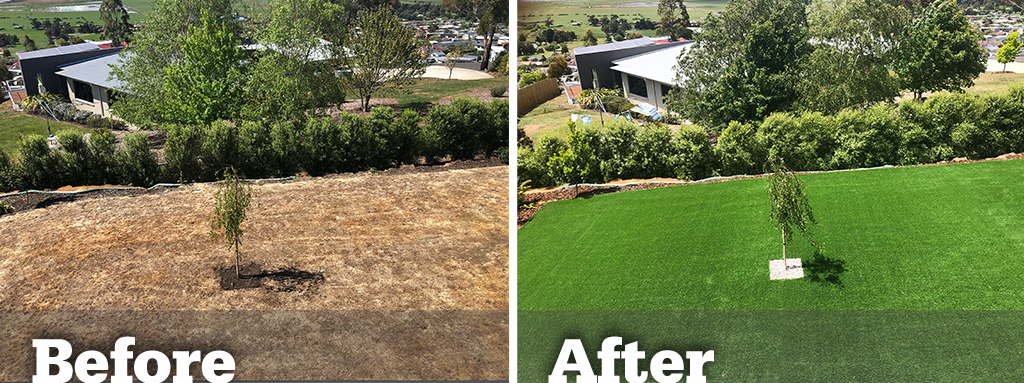
Artificial Turf Landscape Makeovers: Before & After Transformations
Artificial turf can turn the most frustrating outdoor spaces — patchy lawns, sloped yards, and cramped patios — into stunning, functional retreats that stay green year-round. See five real before-and-after transformations.
Key Takeaways:
- Artificial turf can turn the most frustrating outdoor spaces — patchy lawns, sloped yards, and cramped patios — into stunning, functional retreats that stay green year-round.
- High-quality synthetic grass lasts 15 to 20 years with minimal maintenance, making it one of the highest-ROI landscaping investments a homeowner can make.
- Cushioned turf base layers make synthetic grass significantly safer for children and pets than compacted natural grass or bare dirt.
- Artificial turf works on nearly any terrain, including slopes, uneven ground, and small patios — spaces where natural grass consistently fails.
Your lawn doesn't have to be a source of frustration — and these artificial turf transformations prove it.
Whether you're staring at a patchy, mud-soaked disaster zone or a cramped patio that never quite came together, synthetic grass has quietly become one of the most powerful tools in modern landscaping. Homeowners across the country are making the switch, and the before-and-after results are nothing short of remarkable. Burch Landscaping, a trusted name in outdoor transformations, has helped countless homeowners reimagine what their yards can look like — and what they can actually be used for.
These Before & After Transformations Will Make You Rethink Your Lawn
The real power of artificial turf isn't just the green color — it's what it unlocks. Spaces that were previously unusable become outdoor living rooms, play zones, and entertainment hubs. The five transformations below cover the most common problem yards, and each one comes with the specific design decisions that turned things around.
1. Patchy, Uneven Lawn Becomes a Safe Kids and Pets Play Area
Picture a backyard with worn-down dirt patches where kids play, muddy ruts near the fence line, and grass that never quite grew back after one rough summer. This is one of the most common yards in America — and one of the easiest to fix with the right turf installation.
After installation, the same yard becomes a smooth, cushioned, mud-free surface that handles heavy foot traffic without complaint. Parents stop worrying about scraped knees on hard dirt. Dogs stop tracking mud through the back door. The yard actually gets used.
Why Natural Grass Fails in High-Traffic Zones
Natural grass simply isn't built for the punishment kids and pets dish out. Constant foot traffic compacts the soil beneath it, cutting off the oxygen and water roots need to survive. Once the grass thins out, bare dirt takes over — and from there, it's a losing battle of reseeding, watering, and watching it get destroyed all over again. Shaded corners and high-use paths are usually the first to go.
How Cushioned Turf Base Layers Add Safety for Children
One of the most underrated features of a professional turf installation is what goes underneath the grass. A properly installed base layer — typically a combination of compacted aggregate and a shock-absorbing infill like crumb rubber or sand — creates a surface that absorbs impact the way a natural grass root system never could. This is why artificial turf is the surface of choice for playgrounds and sports fields where fall protection matters.
The infill type makes a real difference. Crumb rubber offers excellent shock absorption, while silica sand infill tends to stay cooler and works well in warmer climates. For play areas, many installers recommend a dual-layer system that combines both for optimal safety and temperature control.
The Mud-Free, Low-Maintenance Reality After Installation
Once the turf is down, the maintenance equation changes completely. No more mowing, reseeding, or patching bare spots. Artificial turf drains quickly — most quality products drain at a rate of 30 to 45 inches per hour — which means rain doesn't turn the yard into a mud pit. A quick rinse with a garden hose handles pet messes, and the surface stays clean and usable within minutes.
2. A Cramped Patio Becomes a Cozy Outdoor Retreat
Small yards have a reputation for being awkward — too small to do anything interesting with, too visible to ignore. Synthetic grass changes that dynamic entirely. Even a 200-square-foot side yard or narrow patio strip can feel like a deliberate, designed outdoor room when turf is used as the anchor element.
Small Yard Turf Ideas That Maximize Every Square Foot
The key to a small yard transformation is using turf as a unifying surface rather than trying to fit in too many competing elements. A clean rectangle of synthetic grass surrounded by a simple gravel border and two weather-resistant chairs creates a backyard retreat that feels intentional. Add a small potted plant or two, and suddenly the space reads as curated rather than cramped.
Pairing Synthetic Grass With Pavers, Fire Pits, and Privacy Screens
The most visually striking small yard transformations combine artificial turf with complementary hardscape elements. Pavers laid in a geometric pattern alongside a turf strip create strong visual contrast and define separate zones within a small space. A compact fire pit at one end gives the yard a focal point, while a slatted wood or metal privacy screen along the fence line adds enclosure without making the space feel boxed in.
According to Brian Burch of Burch Landscaping, the combination of pavers and synthetic turf is one of the most requested small-yard upgrades right now — and for good reason. The contrast between hard and soft surfaces creates a finished, high-end look that's difficult to achieve with natural grass alone, especially in tight spaces where grass struggles to establish itself.
3. A Dull, Half-Dead Backyard Becomes an Entertainment Hub
Some backyards don't have one specific problem — they just fail at everything. Uneven soil makes furniture wobble. Dead patches make the yard look neglected. Poor drainage means the ground stays soggy for days after rain. These yards feel more like a liability than an asset, and the fix requires addressing the surface from the ground up.
What Makes Uneven Soil and Poor Sunlight So Destructive to Natural Grass
Natural grass needs consistent sunlight, water, and nutrient-rich soil to thrive — and most backyards can't deliver all three evenly. Trees create shade patterns that shift through the season. Soil composition varies across the yard. Low spots collect water and stay waterlogged while high spots dry out. The result is a checkerboard of struggling grass and bare dirt that no amount of overseeding or fertilizer fully resolves.
How a Uniform Turf Surface Creates the Perfect Foundation for Outdoor Living
Artificial turf solves the uneven yard problem at the installation stage. Before the turf goes down, the ground is graded, compacted, and leveled — which on its own transforms the usability of the space. The finished surface is flat, firm, and consistent from edge to edge, which means patio furniture sits level, kids can run without tripping, and the yard looks polished from every angle.
- Furniture stability: A flat turf surface eliminates the wobble and tipping that plagues natural grass yards with uneven terrain.
- Year-round use: Synthetic grass stays green and usable in winter, summer, and everything in between — no seasonal brown-out.
- Consistent aesthetics: The uniform color and texture of quality turf makes the whole yard look professionally maintained at all times.
- Entertainment-ready: A level, clean surface is ideal for outdoor dining sets, lawn games, and gathering spaces without ongoing upkeep.
The transformation from a half-dead, uneven backyard to a sleek entertainment hub often comes down to the turf grade selected. Premium landscaping turf products feature multi-tonal blade coloring — mixing shades of green, olive, and tan — that mimics the natural variation of real grass and avoids the flat, artificial look of lower-quality options.
4. A High-Maintenance Lawn Becomes a Relaxing Zen Garden
Some homeowners don't want an entertainment hub or a kids' play zone — they want peace. A quiet corner of the yard that looks intentional, stays pristine without effort, and actually delivers the relaxation a backyard should provide. High-maintenance natural grass is the enemy of that vision. The constant mowing schedule, the browning edges in dry spells, the muddy patches after rain — it all adds up to a yard that creates stress instead of relieving it.
Replacing the lawn with artificial turf as the base of a zen-style garden design is one of the most satisfying transformations in residential landscaping. A clean rectangle of low-pile synthetic grass surrounded by raked gravel, large decorative stones, a bamboo privacy screen, and a simple stone pathway creates a space that looks like it belongs in a Japanese garden catalog. The turf stays perfectly manicured without a single mow. The design holds its shape through every season.
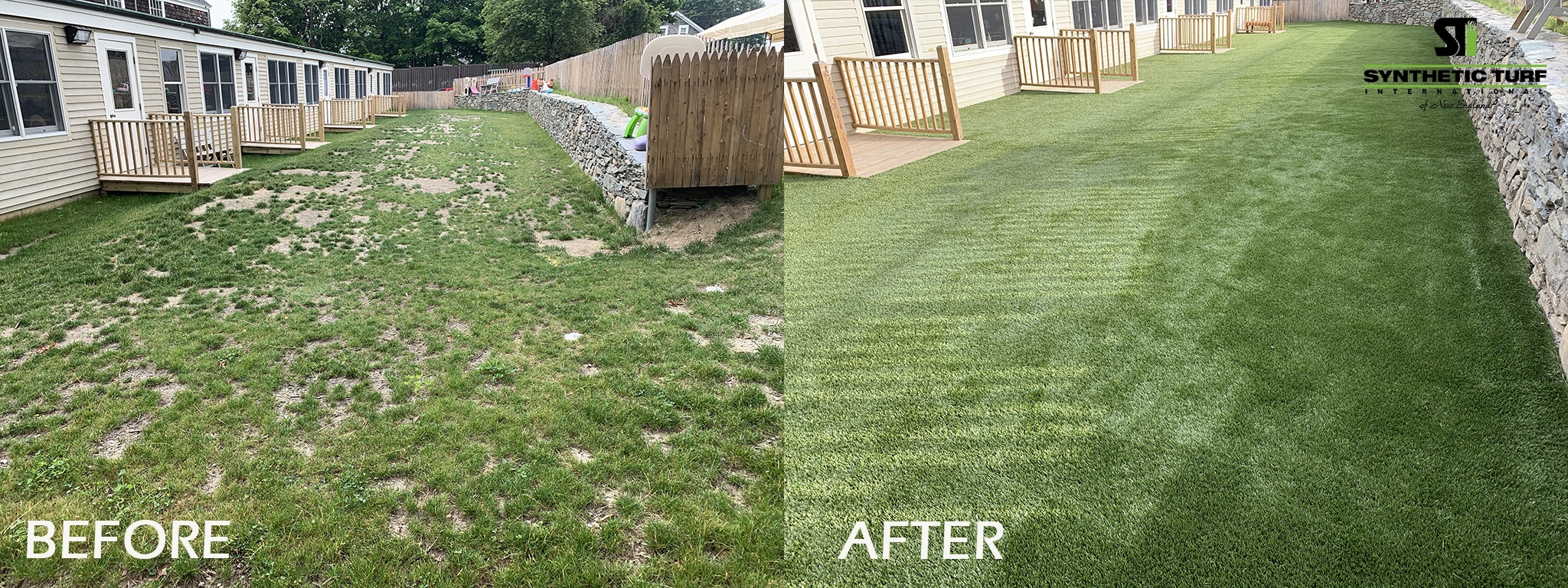
5. Sloped, Erosion-Prone Terrain Becomes a Functional Tiered Yard
Sloped yards are one of the most common sources of landscaping frustration — and one of the most impressive transformation opportunities. What starts as an eroding hillside that washes out every time it rains can become a beautifully tiered outdoor space with defined levels for seating, planting, and play. The key is combining artificial turf with smart hardscape engineering.
Why Slopes Are One of the Hardest Landscaping Problems to Solve
Natural grass on a slope is fighting a losing battle from day one. Rainwater runs downhill faster than it can absorb into the soil, which means the roots never get consistent hydration while the ground below erodes steadily. Mowing a steep incline is physically dangerous and damages grass more than it helps. Fertilizer and seed wash away before they can take hold. Over time, the slope becomes a bare, eroding liability that threatens the stability of everything built above it.
How Artificial Turf Works With Retaining Walls and Terraced Levels
The solution starts with structure. Retaining walls — built from natural stone, concrete block, or timber depending on the aesthetic — divide the slope into flat, manageable terraces. Each level is then graded, compacted, and finished with artificial turf, creating a series of usable outdoor rooms stacked up the hillside. Upper levels can serve as seating areas or garden beds, while lower levels handle foot traffic and play space.
Brian Burch of Burch Landscaping notes that terraced turf installations on slopes are among the most dramatic transformations in residential landscaping — turning what was previously considered a problem area into the most visually striking part of the property. When lit properly at night with integrated landscape lighting, a tiered turf yard becomes a genuine showpiece.
No More Mowing on Dangerous Inclines
The safety benefit here is real and immediate. Pushing a mower up a steep slope is one of the leading causes of lawn equipment injuries — and that risk disappears entirely with artificial turf. Once installed, the surface requires nothing more than an occasional rinse and a light brush to keep the blades upright. The slope that once demanded the most effort from the yard now demands the least.
Beyond safety, the erosion problem is solved at the root level. Artificial turf systems include a permeable backing that allows water to drain through rather than run off the surface, which dramatically reduces soil erosion on sloped terrain. The compacted aggregate base layer beneath the turf further stabilizes the ground, keeping everything in place even during heavy rain events.
The Core Benefits Driving These Transformations
Every one of these before-and-after stories is powered by the same underlying set of advantages that synthetic grass brings to any landscape. Understanding these benefits helps explain why so many homeowners make the switch — and why so few regret it.
The improvements go beyond aesthetics. Artificial turf fundamentally changes the relationship between a homeowner and their yard, shifting it from obligation to enjoyment.
Zero Watering, Mowing, or Fertilizing Required
The maintenance elimination is the benefit most homeowners notice first. The average American spends 70 hours per year maintaining their lawn according to industry estimates — mowing, edging, watering, fertilizing, reseeding, and patching. Artificial turf eliminates all of it. There's no irrigation system to run, no fertilizer schedule to follow, and no mower to maintain. The time savings alone represent a significant lifestyle upgrade for busy households.
The cost savings follow the same trajectory. Eliminating water bills, lawn service fees, fertilizer purchases, and equipment maintenance adds up quickly. Most homeowners recoup a significant portion of their installation cost within the first few years through reduced ongoing expenses alone.
Durability Across Extreme Weather, Pets, and Heavy Foot Traffic
Quality artificial turf is engineered to handle punishment. The polyethylene blades used in premium landscaping turf are UV-stabilized, which means they resist fading and degradation even under years of direct sun exposure. The backing systems are designed to handle freeze-thaw cycles without cracking or separating. Heavy foot traffic, dog claws, and outdoor furniture legs don't leave permanent impressions the way they do in natural grass.
High-quality synthetic grass products carry warranties of 10 to 15 years and realistically last 15 to 20 years in residential applications with basic upkeep. That lifespan covers well over a decade of weekends reclaimed from lawn maintenance.
Year-Round Green Without the Seasonal Struggle
Natural grass has seasons — and in most of the country, those seasons include months of brown, dormant turf that makes the whole yard look neglected. Artificial turf doesn't have an off-season. The same lush, green surface that looks great in July looks exactly the same in January. For homeowners who take pride in their curb appeal year-round, that consistency is genuinely transformative.
How to Budget Your Turf Makeover
Artificial turf installations vary widely in scope and cost, which means there's a realistic entry point for almost any budget. The key is understanding what each investment tier delivers so you can match your expectations to your spend.
Budget-Friendly: DIY Installs and Small Section Upgrades
For homeowners comfortable with manual labor, a DIY turf installation on a small, flat section of yard — a side strip, a patio border, or a defined play area — is a manageable weekend project. Materials for a basic DIY install typically run between $3 and $6 per square foot depending on the turf grade selected, putting a 200-square-foot project in the $600 to $1,200 range for materials alone. This tier works well for accent areas and small high-traffic zones.
Mid-Range: Adding Pavers, Rock, and Custom Edging
The mid-range tier is where most residential transformations land. A professionally installed backyard turf project that incorporates custom edging, decomposed granite borders, and basic paver integration typically runs between $8 and $14 per square foot installed. For a 500-square-foot backyard, that puts the project in the $4,000 to $7,000 range — a meaningful investment that delivers an immediate and dramatic visual upgrade.
This price point also covers sloped yard projects with basic regrading and terraced installations with simple retaining borders. The mid-range is the sweet spot for homeowners who want a professional result without the premium features of a fully custom outdoor living space.
Premium: Integrated Lighting and Built-In Entertainment Features
The premium tier is where a turf installation becomes a full outdoor living transformation. At this level, the project typically includes professional-grade turf with realistic multi-tonal blades, integrated low-voltage landscape lighting along pathways and borders, built-in seating walls, custom fire features, and hardscape elements like flagstone or large-format pavers. Premium installations run from $15 to $25 per square foot and up, depending on the complexity of the design and the features included. For homeowners who entertain regularly or want a backyard that genuinely rivals an indoor living space, this investment delivers a return that goes well beyond aesthetics.
Where to Start Your Own Turf Transformation
The biggest mistake homeowners make when planning a turf project is skipping the assessment phase and jumping straight to material selection. The right turf product, base preparation, and design layout all depend on understanding your specific space before anything else gets decided.
Starting with a clear picture of what you have — and what you want — saves time, money, and the frustration of a result that doesn't match your vision. The process is straightforward when you break it into two steps.
Assess Your Space: Size, Slope, and Intended Use
Walk your yard and take honest inventory. Note the total square footage of the area you want to cover, any slope or grade changes, drainage patterns after rain, shaded zones, and how the space is actually used day-to-day. A yard that hosts weekend barbecues for twenty people has different turf requirements than a quiet side yard used primarily by one dog. Intended use determines the turf pile height, infill type, and base preparation your project needs to perform correctly over time.
Pay special attention to drainage. Areas that collect standing water after rain need additional base work — typically a deeper aggregate layer and sometimes a French drain system — before turf can be installed successfully. Skipping this step is the most common cause of turf installations that fail prematurely or develop odor problems in pet areas.
Choose a Design That Matches Your Vision
Once you understand your space, the design phase becomes much easier. Gather reference images of transformations that match the feeling you want — whether that's a sleek modern entertainment space, a naturalistic zen garden, or a durable play zone. Identify the complementary elements that resonate with you: pavers, gravel borders, retaining walls, lighting, privacy screens. A clear visual direction makes every subsequent decision faster and ensures the finished result feels intentional rather than assembled piece by piece.
The Right Turf Makeover Can Completely Change How You Use Your Yard
Every transformation in this article started with a yard that felt like a problem. What changed wasn't just the surface — it was the relationship between the homeowner and their outdoor space. When the maintenance burden disappears and the aesthetics improve overnight, the yard stops being something to manage and starts being somewhere to actually spend time.
- Patchy play areas become safe, cushioned surfaces that kids and pets use daily without creating mud or bare spots.
- Cramped patios become cozy retreats that feel larger and more intentional with the right turf-and-paver combination.
- Neglected backyards become entertainment-ready gathering spaces with a flat, consistent surface that handles furniture and foot traffic with ease.
- High-maintenance lawns become peaceful zen gardens that require nothing more than an occasional rinse to stay pristine.
- Eroding slopes become stunning tiered yards with retaining walls, defined levels, and a finished look that was previously impossible to achieve with natural grass.
The common thread across all five transformations is intentional design paired with the right installation. Artificial turf is the enabler — but the vision, the complementary materials, and the quality of the base preparation are what determine whether the result is good or genuinely extraordinary.
If any of these before-and-after scenarios sound like your yard right now, the gap between where you are and where you want to be is smaller than it looks. The right plan, the right materials, and the right installation team can close that gap in a matter of days — and the results can last two decades with minimal effort on your part.
Frequently Asked Questions
Homeowners considering a turf transformation tend to have the same core questions, and they deserve straight answers before committing to a project of this scope.
How Long Does Artificial Turf Last Before It Needs to Be Replaced?
High-quality artificial turf installed over a properly prepared base lasts between 15 and 20 years in residential applications. Products with UV-stabilized polyethylene blades and durable backing systems hold up well through freeze-thaw cycles, heavy foot traffic, and pet use. Most reputable manufacturers back their products with 10 to 15 year warranties. The primary factor that shortens turf lifespan isn't the material itself — it's a poorly prepared base that allows shifting, drainage problems, and uneven wear patterns to develop over time.
Can Artificial Turf Be Installed on Sloped or Uneven Ground?
Yes — and sloped terrain is actually one of the best use cases for artificial turf. Unlike natural grass, synthetic turf doesn't depend on soil conditions or consistent sunlight to survive on a slope. The installation process includes grading and compacting the base layer regardless of terrain, which means the finished surface can follow the natural contour of the land or be terraced into flat levels using retaining walls. Either approach produces a finished result that natural grass on a slope simply cannot match.
Is Artificial Turf Safe for Kids and Pets?
Modern artificial turf products designed for residential use are manufactured without lead and meet or exceed safety standards for playground applications. The infill materials used in quality installations — silica sand, crumb rubber, or organic alternatives like cork and coconut fiber — are non-toxic and safe for direct contact.
For pets specifically, the primary safety consideration is heat retention in direct summer sun and odor management in dog-heavy yards. A quality permeable backing combined with an enzymatic infill product handles pet waste effectively, and a periodic rinse with a garden hose keeps the surface clean and odor-free between deeper cleanings.
The cushioned base layer installed beneath the turf surface adds an additional safety dimension for children, absorbing impact from falls in a way that compacted natural grass or bare dirt cannot. For dedicated play areas, a shock-absorbing infill specified to meet ASTM F1292 fall attenuation standards provides a measurable and documented level of fall protection.
How Much Does a Backyard Artificial Turf Makeover Typically Cost?
The installed cost of a residential artificial turf project ranges from roughly $8 to $25 per square foot depending on turf grade, site preparation requirements, and any complementary hardscape elements included in the design. A straightforward 500-square-foot backyard installation lands in the $4,000 to $7,000 range at mid-market pricing. Premium projects incorporating custom lighting, pavers, retaining walls, and high-grade turf products scale well above that. For an accurate project estimate tailored to your specific yard, contact Burch Landscaping for a free on-site consultation.
Does Artificial Turf Get Too Hot in Summer?
This is the most legitimate concern about artificial turf, and it deserves an honest answer. Synthetic grass does retain more heat than natural grass in direct sunlight — surface temperatures on a hot summer day can reach significantly higher than the ambient air temperature, particularly with dark-colored products and rubber infill.
The practical solution is infill selection. Silica sand infill retains substantially less heat than crumb rubber. Newer organic infill products — including cork, coconut fiber, and acrylic-coated sand — are specifically engineered to reduce surface temperatures and perform measurably better in heat-prone climates.
Strategic shade planning also makes a major difference. Yards with tree canopy cover, pergolas, or shade sails over the primary use areas rarely experience the heat issues associated with fully exposed, rubber-infill installations. For most homeowners in temperate climates, the heat concern is real but manageable with the right product and design choices.
The bottom line: in shaded or partially shaded yards, heat is rarely a meaningful issue. In fully exposed yards in hot climates, specifying the right infill material and incorporating shade elements into the design effectively addresses the concern without sacrificing the core benefits of a turf installation.
Ready to stop managing your lawn and start enjoying your yard? Contact Burch Landscaping today for a free estimate and find out exactly what your before-and-after transformation could look like.
Ready to start your project?
Contact Brian Burch for a free estimate on your landscaping project in Roseville and the Greater Placer Valley.